
The first days home are the hardest
The hospital says your mother is ready to go home. She is not ready to climb the stairs to her bedroom, shower on her own or cook dinner.
That gap between “medically ready” and “able to manage” is where many families land after discharge. Someone takes time off work. Someone sleeps on the couch. Everyone hopes nothing goes wrong on the front steps.
Post-hospital home care in Baltimore fills that gap for a few days or a few weeks. A caregiver helps with the physical tasks of recovery, so the person can rest and get stronger at home, and family can go back to work.
What home care after hospital discharge covers
Post-hospital care is mostly practical. In the first week, a caregiver typically:
- helps the person out of bed, to the bathroom and back,
- assists with washing and dressing within the surgeon’s limits,
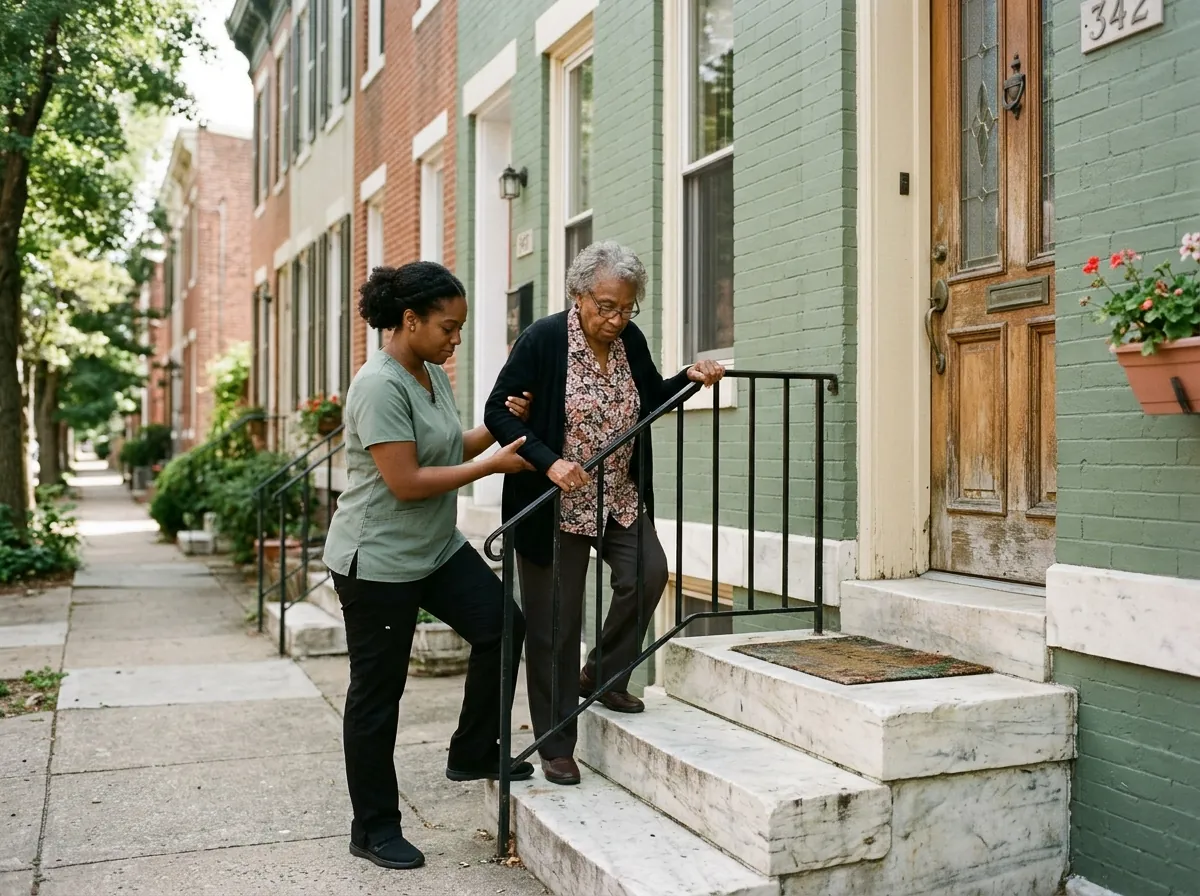
- spots on the stairs and the front steps,
- cooks simple meals and keeps water within reach,
- gives reminders for medications at the times on the discharge papers,
- keeps paths clear and floors dry,
- writes down how the day went for the family.
The same hands-on tasks are described on our personal care services page. For laundry and cleaning beyond the first weeks, see our homemaker services. Post-hospital care is one of our specialized home care services in Baltimore.
Medicare home health vs non-medical home care after discharge
Families often hear “home health” at discharge and assume all help at home is covered. It isn’t. Two different services exist, and most people recovering at home need both.
| Medicare home health | Non-medical home care (Beulah) | |
|---|---|---|
| Who orders it | A doctor, after an in-person visit | The family |
| Who qualifies | Homebound, with a part-time or intermittent skilled need | Anyone who needs help at home |
| What it covers | Skilled nursing, physical, occupational and speech therapy, medical social services, an aide while skilled care continues | Bathing, dressing, transfers, meals, reminders, housework, company |
| Schedule | Short visits, a few times a week | Hours you choose, up to 24-hour care |
| Cost to patient | $0 for covered services | Private pay or Medicaid if eligible |
| Not covered | 24-hour care, meals, homemaker services outside the care plan, personal care alone | Nursing, wound care, injections, therapy |
Source: Medicare.gov, home health services. Under Medicare, homebound means leaving home takes considerable effort or isn’t advised. Trips to the doctor and short outings such as religious services are still allowed.
Beulah Home Care does not provide skilled nursing or therapy. Our caregivers follow the limits the nurse and therapist set.
Coming home from Johns Hopkins Bayview and other Baltimore hospitals
Our office on O’Donnell Street is a short drive from Johns Hopkins Bayview Medical Center on Eastern Avenue, the closest hospital to Canton. Many East Baltimore families also come home from The Johns Hopkins Hospital on Orleans Street, MedStar Franklin Square in Rosedale, Mercy Medical Center, University of Maryland Medical Center and MedStar Union Memorial.
Every hospital has a case manager or discharge planner. Ask for them by name the day you learn a discharge date is coming. They can help with Medicare home health referrals and equipment orders. Non-medical home care is something the family arranges directly with an agency.
Hospital discharge checklist for Baltimore families
Before your family member leaves the hospital:
- Get the discharge papers explained. Ask what activity limits apply, such as no stairs, no lifting or no bending, and for how long.
- Ask about Medicare home health. Does the doctor think the patient qualifies? Which agency will call, and when?
- Confirm equipment. Walker, shower chair, raised toilet seat or hospital bed, and who delivers it.
- Get the medication list. Know what is new, what has stopped and when each dose is due. Fill new prescriptions before or on the way home.
- Book follow-up appointments and plan the ride.
- Set up the house. A bed on the first floor if stairs are off limits, clear paths, a lamp by the bed, a phone within reach.
- Plan the first 72 hours. Decide who is with the patient each day and night, and arrange home care for the gaps.
Rowhouse stairs, marble steps and fall risk
Baltimore rowhouses are hard on anyone recovering from surgery. Marble front steps get slick when wet, and not every stoop has a sturdy railing. Interior stairs tend to be steep and narrow, and in many homes the full bathroom is upstairs.
A few fixes help:
- Set up a temporary bedroom on the first floor for the first weeks if stairs are off limits.
- Use a bedside commode if the bathroom is upstairs.
- Add a handrail to the front steps if you can, and avoid using them alone when wet or icy.
- Plan every trip up or down with someone standing by.
The first trips out the front door, to a follow-up visit or into a car, are when a second person matters most.
How to plan the first weeks of post-hospital home care
Most families need more help at first and less as strength returns.
| Stretch | Typical help |
|---|---|
| Days 1–3 | Longest hours, sometimes overnight; help with every transfer and trip to the bathroom |
| Rest of week 1 | Morning and evening personal care, meals, stairs, company |
| Weeks 2–4 | Shorter visits focused on bathing, meals and errands |
| After that | Step down, or switch to a steady weekly schedule if needs remain |
If nights are the risky part, short-term 24-hour home care can cover the first days. If the family caregiver needs relief, respite care in Baltimore gives them a break. We can talk through a plan before discharge: call our Canton office at 410-421-1041.
How to get a home health aide after surgery
- Ask before discharge whether the surgeon will order Medicare home health. You need a part-time skilled need, homebound status and a Medicare-certified agency.
- Know what the aide covers. A Medicare home health aide comes only while skilled nursing or therapy continues, and visits are short.
- Fill the gaps privately. For longer hours, overnights, or help after skilled care ends, a private home care agency like Beulah can provide a caregiver on your schedule.
Paying for post-hospital care in Maryland
Most short-term post-hospital care is private pay. For context, Maryland’s 2024 median for a home health aide was about $35 an hour, per Genworth/CareScout. That is statewide market data, not our rate.
If the person already uses Maryland Medicaid personal assistance, keep the supports planner informed. Community First Choice eligibility ends after an institutional stay of 30 or more consecutive days (COMAR 10.09.84.04), so a long rehab stay can affect services.
Coming home after a nursing facility stay? Community First Choice transition services can pay up to $3,000 toward costs like a rent deposit or first month’s rent (CMS, SPA MD-23-0012). A nursing facility resident whose stay Medicaid has paid for at least 30 days can apply for the Community Options Waiver without waiting on the registry (MDH).
Beulah Home Care serves Baltimore families who use Maryland Medicaid personal assistance programs, and our office can help with the application steps. Read more about Medicaid home care in Maryland or Community First Choice.
Local help for the weeks after discharge
- Meals on Wheels of Central Maryland, 515 South Haven Street, Baltimore, MD 21224, 410-558-0923, for home-delivered meals.
- MTA Mobility paratransit for follow-up visits if a disability makes buses hard. An approved Personal Care Attendant rides free.
- Maryland Access Point of Baltimore City, 410-396-2273, Monday to Friday, for options counseling and benefits checks.
When short-term help turns into longer care
Sometimes recovery reveals a bigger need. A parent with memory loss may get more confused after a hospital stay, or a stroke may leave lasting limits. In that case, look at dementia home care, disability home care or a live-in caregiver.
Serving Canton, Highlandtown and Baltimore County
Beulah Home Care is an East Baltimore home care agency at 3700 O’Donnell Street. We help families in Canton, Highlandtown, Greektown, Brewers Hill, Fells Point and around Bayview, plus Baltimore County communities such as Essex, Middle River and Rosedale. See our full service area. To book a free consultation, contact our office.